Understanding the Peril: Unraveling Causes of Frontal Collisions and Overturns on the B401
The Bundesstraße 401 (B401) in Lower Saxony, Germany, serves as a vital artery, connecting communities and facilitating crucial freight transport, particularly around the Oldenburg region. However, like any busy roadway, it is not immune to severe traffic incidents. Recent B401 accidents, including devastating frontal collisions and harrowing lorry overturns, underscore the inherent risks and the profound impact these events have on individuals, emergency services, and regional traffic flow. This article delves into specific incidents on the B401, examining the common causes, severe consequences, and crucial prevention strategies for such high-impact crashes, emphasizing the critical need for road safety.
The term Unfall B401 frequently appears in local news, highlighting the recurring nature of severe incidents that demand closer scrutiny. Understanding the dynamics of these specific types of accidents—frontal collisions and overturns—is essential for promoting greater awareness and fostering a culture of road safety.
The Devastating Impact of Frontal Collisions on the B401
Frontal collisions are among the most catastrophic types of road accidents due to the combined speed and force of impact from both vehicles. The B401 has unfortunately seen its share of these head-on crashes, leading to severe injuries and prolonged road closures.
Case Study: Edewecht and Klein Scharrel Frontal Crashes
One particularly severe incident occurred on the B401 near Edewecht on a Wednesday morning. A 37-year-old car driver, for reasons still under investigation, veered into oncoming traffic on a long right curve between Süddorf and Husbäke. The car collided head-on with an approaching lorry, originating from Oldenburg, before being violently propelled into a roadside ditch. The car driver sustained life-threatening injuries, necessitating a rescue helicopter and extensive medical intervention. The 41-year-old lorry driver, though less severely injured, was also hospitalized.
Another grim example unfolded on the B401 near Klein Scharrel (Edewecht municipality). An 83-year-old driver, traveling from Edewecht towards Oldenburg, inexplicably crossed into the opposing lane shortly before Klein Scharrel. This resulted in a brutal frontal collision with an oncoming semi-trailer. Both the elderly driver and his 58-year-old passenger suffered serious injuries and were trapped, requiring fire brigade rescue. The 49-year-old lorry driver was treated for shock and minor injuries. These incidents demonstrate a disturbing pattern of vehicles losing control and entering the path of oncoming traffic, with devastating results.
Common Contributors to Head-On Accidents
While the exact causes for each Unfall B401 often remain under police investigation, several factors commonly contribute to frontal collisions:
- Driver Distraction and Fatigue: Even a momentary lapse in attention or the onset of drowsiness can lead to a vehicle drifting into the opposite lane.
- Speeding and Reckless Driving: Excessive speed, particularly on curves, reduces a driver's ability to maintain control and react to unforeseen circumstances.
- Impairment (Alcohol/Drugs): Substance use significantly impairs judgment, reaction time, and coordination, dramatically increasing accident risk.
- Sudden Medical Emergencies: Drivers experiencing sudden health issues (e.g., heart attack, stroke) can lose control of their vehicle.
- Challenging Road Geometrics: Certain curves, blind spots, or insufficient median barriers can increase the likelihood of cross-lane collisions. The Edewecht incident specifically mentioned a "long right curve" as the location.
- Poor Overtaking Judgement: Miscalculating distances or speeds during an overtaking manoeuvre can force a head-on impact.
Lorry Overturns on the B401: A High-Stakes Scenario
Lorry accidents, particularly overturns, are complex incidents that pose significant challenges for rescue services and create massive traffic disruptions. The B401 has also been the scene of such a dramatic event.
The Oldenburg Lorry Overturn Incident
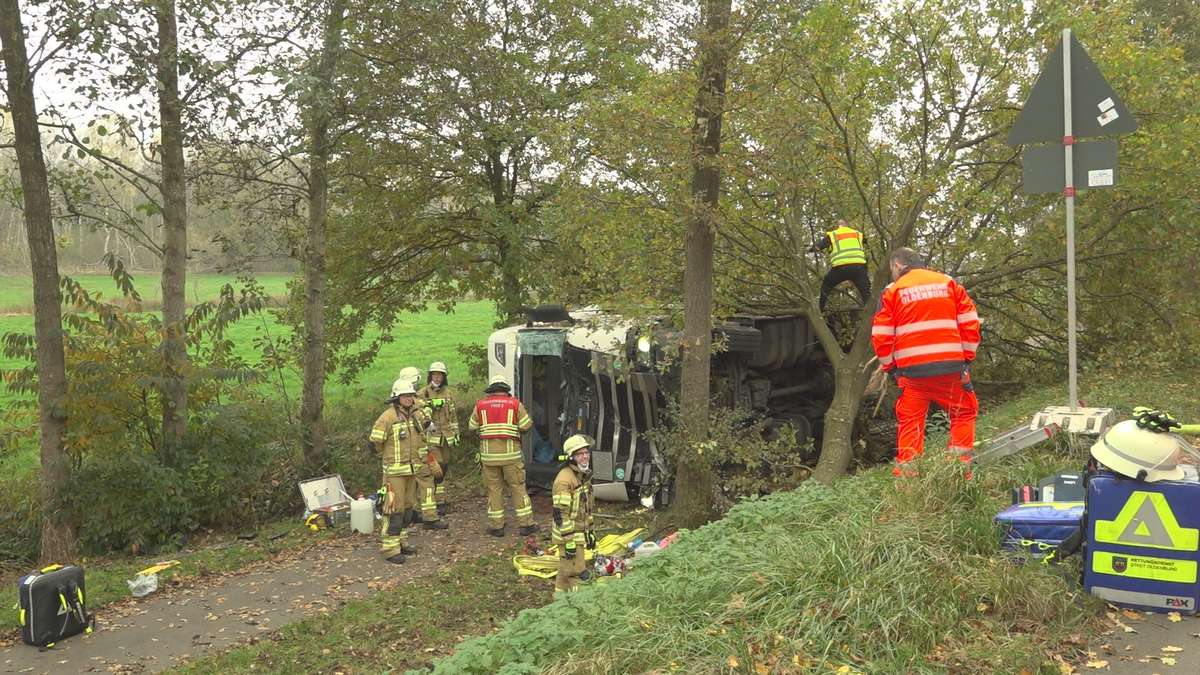
A notable Unfall B401 occurred near Oldenburg when a lorry veered off the road for reasons yet unknown. The heavy vehicle slid down an embankment, collided with a tree, and then violently overturned, coming to rest on its side on a path adjacent to the roadway. The driver was trapped inside the damaged cab and sustained injuries, requiring a skilled extraction by the fire brigade before being transported to a hospital. The sheer scale of the incident—a heavy goods vehicle off-road and overturned—necessitated complex recovery operations, leading to the B401, specifically the Küstenkanalstraße section, being completely shut down for several hours. This caused considerable traffic delays and required extensive diversions, exemplifying the disruptive potential of B401 LKW Crashes.
Why Do Lorries Overturn? Understanding the Dynamics
Lorry overturns are often a result of a combination of factors, given their unique characteristics:
- High Centre of Gravity: Lorries, especially when loaded, have a higher centre of gravity compared to passenger cars, making them more susceptible to rolling over, particularly in turns.
- Excessive Speed in Bends or Ramps: Taking a curve too quickly significantly increases the centrifugal force acting on the lorry, pushing it outwards and upwards.
- Improperly Secured or Shifting Loads: If cargo is not properly distributed or secured, it can shift during braking, acceleration, or cornering, altering the lorry's balance and initiating a roll.
- Sudden Evasive Manoeuvres: A sharp turn of the steering wheel to avoid an obstacle can easily destabilize a heavy vehicle, leading to a jackknife or overturn.
- Strong Crosswinds: High-sided vehicles present a large surface area to strong winds, which can exert enough force to push a lorry off course or even over.
- Tyre Failures: A sudden tyre blowout, especially on a steer axle, can lead to immediate loss of control and potential overturn.
Beyond the Immediate Crash: Long-Term Consequences and Road Safety
The immediate impact of an Unfall B401 involving frontal collisions or overturns is often dramatic, but the consequences reverberate far beyond the crash site.
Severe Injuries and the Role of Emergency Services
The incidents highlighted above consistently resulted in severe to life-threatening injuries, necessitating immediate and intensive medical intervention. The rapid response of local fire brigades, paramedics, and in critical cases, rescue helicopters, is crucial for saving lives and minimizing long-term damage. Extricating trapped individuals from mangled vehicles is a complex and dangerous task that showcases the specialized skills of rescue personnel.
Traffic Chaos and Economic Repercussions
As seen with the Edewecht incident, which closed the B401 for seven hours, and the Oldenburg lorry overturn, which caused hours of closure, these accidents create significant traffic chaos. Diversions strain alternative routes, cause delays for commuters and freight, and have measurable economic repercussions through lost productivity and increased fuel consumption. The repeated nature of such events leads to ongoing challenges for traffic management in the region, as further detailed in our related article on B401 Accidents: Repeated Road Closures and Traffic Chaos Near Oldenburg.
Investigating the "Unknown Cause": A Call for Vigilance
Many initial accident reports cite "unknown causes" as investigations get underway. Police painstakingly reconstruct events, analyze vehicle damage, gather forensic evidence, and crucially, seek witness statements. The call for witnesses regarding the Edewecht frontal collision, specifically asking about road conditions like ice, underscores the importance of public cooperation in understanding these complex incidents and preventing future ones. Every piece of information can be vital in piecing together the full picture.
Proactive Measures: Enhancing Safety on the B401
While accidents are an unfortunate reality, many are preventable. A combination of responsible driving, improved infrastructure, and vigilant enforcement can significantly enhance safety on the B401.
Tips for Drivers
- Stay Focused and Avoid Distractions: Put away your phone, avoid eating or complex navigation adjustments while driving. Your full attention belongs to the road.
- Adhere to Speed Limits and Road Signs: Speed limits are set for a reason, considering road design and potential hazards. Reduce speed in adverse weather conditions or on challenging stretches like curves.
- Maintain Safe Following Distances: This provides crucial time to react to sudden braking or unexpected events.
- Regular Vehicle Maintenance: Ensure your brakes, tires, steering, and lights are in excellent working order. Tire blowouts and mechanical failures can be catastrophic.
- Be Aware of Weather and Road Conditions: Adjust your driving for rain, fog, ice, or strong winds. Black ice, in particular, is a silent killer.
- Plan Journeys and Take Breaks: Fatigue is a major contributor to accidents. If you feel tired, pull over and rest.
The Role of Infrastructure and Enforcement
Road authorities also play a critical role. This includes evaluating the B401 for potential improvements such as installing median barriers to prevent cross-lane excursions, improving signage on curves, enhancing road surfacing, and ensuring prompt removal of hazards. Regular police enforcement of traffic laws, particularly against speeding and distracted driving, acts as a deterrent. The ongoing investigations into these severe Unfall B401 incidents provide valuable data for identifying high-risk areas and implementing targeted safety measures. For more insights into the challenges faced by heavy goods vehicles on this route, refer to our article on B401 LKW Crashes: Highlighting Severe Injuries and Traffic Delays.
A Shared Responsibility for Safer Roads
The incidents of frontal collisions and lorry overturns on the B401 serve as stark reminders of the fragility of life and the devastating consequences of road accidents. While investigations often point to a confluence of factors, driver behavior remains a predominant element. By understanding the causes, appreciating the severe impacts, and diligently implementing preventive measures, we can collectively work towards making the B401, and all roads, safer for everyone. Road safety is a shared responsibility that demands constant vigilance from every driver, every passenger, and every authority.